 Get Early Bird Access to Our Automated SEO Accelerator Plugin,
Leveraging AI in Meta Ads for Small Businesses: Targeting & Performance Insights
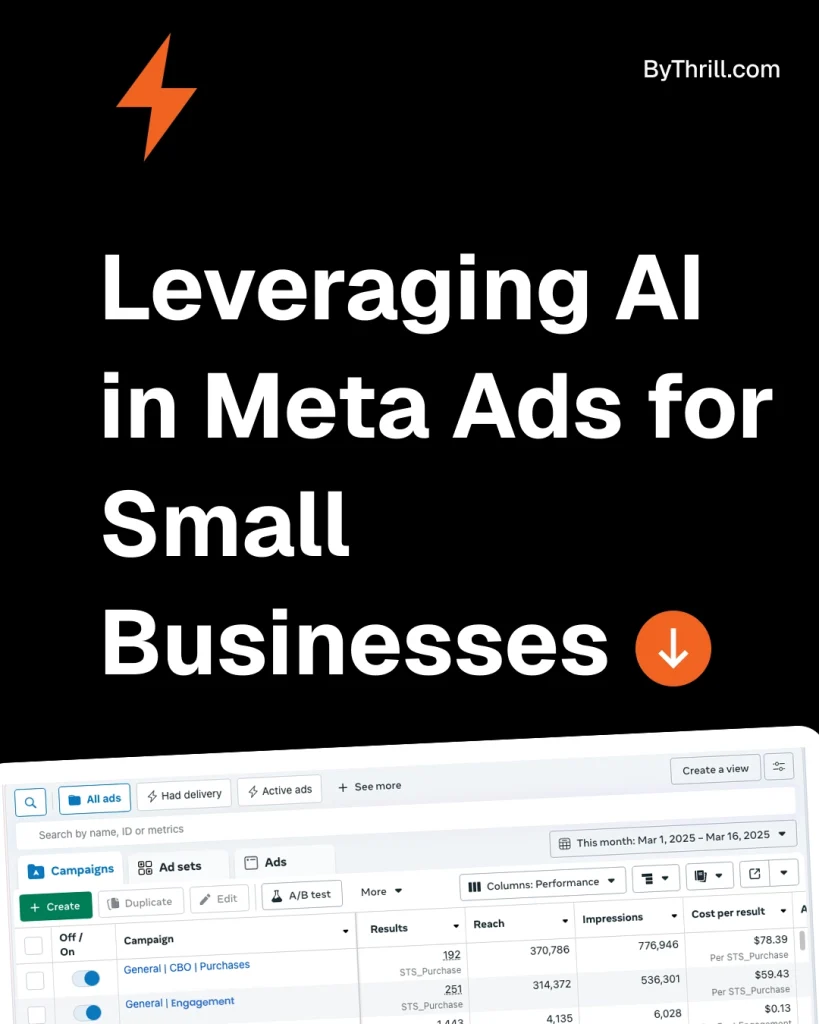
Small businesses today have unprecedented opportunities to reach customers through Meta’s advertising platforms (Facebook and Instagram). A key driver of success in these ads is artificial intelligence (AI), which Meta deeply integrates into ad targeting and performance optimization. AI analyzes user data and behavior at scale, allowing even businesses with modest ad budgets to reach the right audience at the right time (Cube Creative).
AI is now foundational to Meta’s ad delivery, enhancing how campaigns are set up, whom they reach, and how results are measured (Meta). This analysis explores how small businesses can leverage AI for smarter ad targeting and better performance measurement on Meta, covering:
- The role of AI in ad optimization
- AI-driven tools for audience segmentation, bidding, and placements
- A comparison of traditional vs. AI-powered ad strategies
- Real-world case studies showcasing AI’s impact
- Actionable strategies to implement AI in Meta Ads effectively
The Role of AI in Optimizing Meta Ad Targeting
Meta’s advertising ecosystem relies heavily on AI-powered audience matching. Machine learning models analyze hundreds of signals—from past engagement patterns to demographic and interest data—to determine which users fit an advertiser’s goals. This means small businesses no longer have to guess their ideal audience manually; the system learns and refines targeting automatically (Cube Creative).
Meta’s Advantage+ Audience (formerly automated targeting) allows the algorithm to dynamically refine targeting based on live ad performance. Businesses using Advantage+ targeting have seen up to 33% improvement in campaign results compared to manual targeting (Jon Loomer). As of 2025, nearly 70% of small business ad campaigns on Meta use Advantage+ automation for audience selection (TikTok).
AI-Driven Audience Segmentation and Targeting
Traditional ad targeting involved selecting interests, demographics, and behaviors manually. Today, AI dynamically adjusts audience segments based on real-time engagement and conversion data. Key AI-driven targeting features include:
- Lookalike Audiences: AI analyzes existing customer traits and builds new audiences with similar behaviors (Rely Digital).
- Advantage Detailed Targeting: AI expands or refines your chosen audience when beneficial for campaign performance (Jon Loomer).
- Predictive Targeting: AI prioritizes users likely to convert, even if they fall outside manually defined audience parameters (Koast AI).
Rather than being limited by predefined audience criteria, Meta’s AI continuously optimizes ad delivery based on real-time engagement, ensuring higher relevancy and conversion rates (Cube Creative).
AI in Bidding and Budget Optimization
Meta’s AI-driven bidding strategies help small businesses maximize their ad spend by automatically adjusting bids to secure the best impressions. Features include:
- Automatic Bidding: AI determines the optimal bid per impression in real-time auctions (Reddit).
- Campaign Budget Optimization (CBO): AI distributes budgets across ad sets for the best return (Cube Creative).
- ROAS Targeting: AI prioritizes bids based on customer purchase value, optimizing for revenue growth (Rely Digital).
Instead of manually tweaking bids, AI automates budget allocation to maximize conversions and reduce wasted ad spend, particularly for small businesses with limited marketing resources.
AI-Optimized Ad Placements and Creative Delivery
AI determines where and how ads should appear to maximize performance. Meta’s AI-powered placement optimization includes:
- Advantage+ Placements: AI selects the most effective placements across Facebook, Instagram, Messenger, and Audience Network (Rely Digital).
- Dynamic Creative Optimization: AI tests multiple ad variations in real time, showing users the most relevant version (Koast AI).
- Dynamic Ads: AI personalizes ad content based on user interactions, such as abandoned carts or recent product views (Cube Creative).
These AI-driven tools enable small businesses to run high-performing campaigns without extensive A/B testing or manual adjustments.
Traditional Ad Management vs. AI-Enhanced Strategies
| Feature | Traditional Ad Management | AI-Enhanced Strategy |
|---|---|---|
| Audience Targeting | Manually selected interests & demographics | AI-driven audience expansion & lookalikes |
| Ad Placements | Selected manually (e.g., Facebook Feed only) | AI dynamically optimizes placement & format |
| Bidding | Manual bid setting | AI-automated real-time bid optimization |
| Budget Allocation | Fixed per ad set | AI shifts budget based on performance |
| Creative Optimization | A/B testing required | AI tests & optimizes ad variations automatically |
AI-powered advertising is more adaptive, efficient, and cost-effective compared to manual ad management, helping small businesses maximize performance with minimal effort (Jon Loomer).
Data-Backed Insights and Case Studies
Real-world case studies highlight AI’s impact:
- Monos Luggage: AI-driven Advantage+ campaigns resulted in a 58% lower cost per purchase and a 35% increase in ROAS (Meta).
- Jenny Bird Jewelry: AI optimization led to a 14% lower cost per purchase and 17% more conversions (Meta).
- Brand X (Agency Case Study): Lookalike audiences powered by AI increased conversions by 30% (Cube Creative).
- Company Y: AI-driven dynamic retargeting boosted abandoned cart conversions by 25% (Cube Creative).
These examples reinforce that AI-enhanced targeting outperforms traditional methods, making it an invaluable tool for SMB advertisers.
Actionable Strategies for Small Businesses
To implement AI-driven Meta Ads effectively:
- Enable Advantage+ Campaigns: Let Meta’s AI automate targeting and placements.
- Use Lookalike Audiences: Upload customer data and let AI find similar buyers.
- Adopt Automated Bidding & CBO: Allow AI to allocate spend for optimal results.
- Leverage Dynamic Creative & Personalized Ads: Test multiple variations automatically.
- Optimize Data Inputs: Ensure Meta Pixel & Conversions API are properly set up.
Conclusion
AI is transforming Meta Ads into a more efficient, results-driven platform for small businesses. By embracing AI-powered tools for targeting, bidding, placements, and creatives, businesses can improve performance, reduce costs, and maximize ad impact. AI in advertising is not just the future; it’s the present, and SMBs that leverage these innovations will gain a significant competitive edge.
By implementing AI-driven strategies today, small businesses can enhance their digital marketing efficiency and drive better ROI with less manual effort.
